Introduction
Cleaning is an essential part of maintaining a healthy and inviting home or office. While many people engage in regular cleaning routines to keep their spaces tidy, there’s a level of cleaning that often gets overlooked: deep cleaning. Whether you’re dealing with a home or office, understanding the difference between regular cleaning and deep cleaning can help you achieve a healthier, more hygienic space.
But what exactly is the difference between regular cleaning and deep cleaning, and why is it so important to understand when to schedule a deep clean?
In this article, we’ll explain the key distinctions between regular cleaning and deep cleaning, the benefits of each, and why incorporating both into your cleaning routine is essential for maintaining a clean and healthy environment.
What is Regular Cleaning?
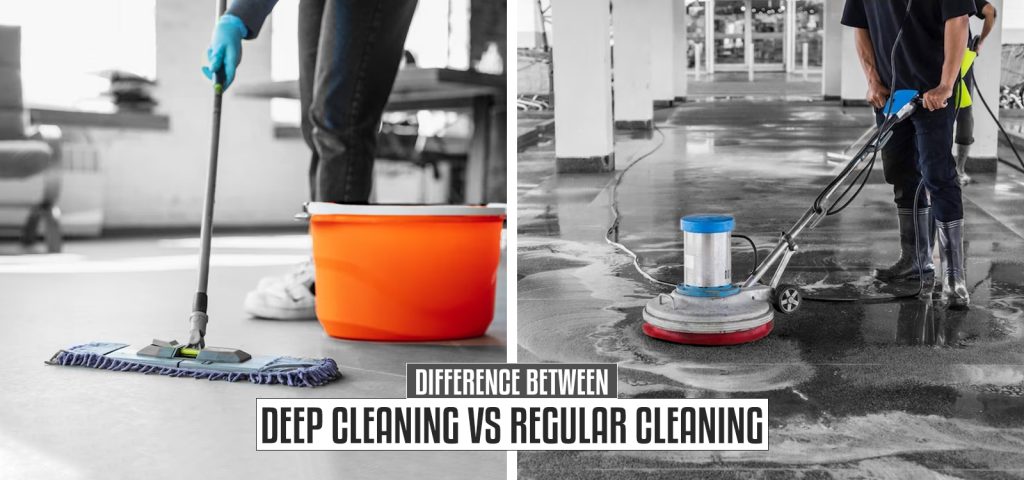
Regular cleaning, sometimes called routine cleaning, refers to the cleaning tasks that you perform on a weekly or daily basis. These tasks generally focus on the surface-level cleaning of a space and help keep your home or office in good order. Regular cleaning can include:
- Dusting: Wiping down surfaces such as countertops, tables, shelves, and baseboards to remove dust and dirt.
- Vacuuming: Cleaning floors, carpets, and rugs to remove dirt, dust, and debris.
- Mopping: Cleaning hard floors such as tile, wood, or laminate using a mop and a floor cleaner.
- Wiping Surfaces: Cleaning kitchen counters, bathroom surfaces, and other frequently used areas to remove food crumbs, grease, and other minor messes.
- Taking Out the Trash: Emptying garbage bins to prevent them from overflowing and causing unpleasant odors.
- Cleaning the Dishes: Washing dishes or loading them into the dishwasher after meals.
These tasks are usually done frequently, depending on the type of space and the level of activity. For instance, in a kitchen, regular cleaning would include wiping down the countertops, cleaning the stove, and doing the dishes. In a living room, it might involve dusting furniture, vacuuming carpets, and tidying up the space. Regular cleaning helps keep the space maintained and prevents dirt and grime from accumulating.
Benefits of Regular Cleaning:
- Maintains Cleanliness: Regular cleaning ensures that everyday messes don’t pile up and cause clutter.
- Reduces Dust and Allergens: Regular dusting and vacuuming prevent the buildup of dust and allergens, making the environment more comfortable for people with sensitivities.
- Prevents Stains: Cleaning spills and messes immediately prevents stains from setting in, especially on carpets, upholstery, or furniture.
While regular cleaning helps maintain a basic level of cleanliness, it does not address the hidden grime that builds up over time.
What is Deep Cleaning?
Deep cleaning, on the other hand, involves more thorough, intensive cleaning tasks that go beyond the surface. It’s a type of cleaning that focuses on areas that aren’t typically covered by regular cleaning routines. Deep cleaning addresses the buildup of dirt, grime, dust, and allergens in places that you may not notice on a daily basis.
Some examples of deep cleaning tasks include:
- Cleaning Baseboards: Wiping down baseboards and molding to remove dust, dirt, and buildup that has accumulated over time.
- Cleaning Behind Appliances: Pulling out the stove, refrigerator, dishwasher, and other appliances to clean the hidden dust, grease, and grime behind them.
- Cleaning Air Vents and Ducts: Dust and allergens often accumulate in HVAC vents, ducts, and filters. Cleaning them helps improve air quality and prevent respiratory issues.
- Scrubbing Grout and Tiles: Deep cleaning grout and tiles in kitchens and bathrooms to remove stubborn stains and mold buildup.
- Cleaning Windows (Interior and Exterior): Washing the interior and exterior windows, including wiping the sills, frames, and tracks, to eliminate dust, cobwebs, and smudges.
- Sanitizing High-Touch Surfaces: Deep cleaning often includes sanitizing high-touch areas like light switches, door handles, and faucets.
- Cleaning and Disinfecting the Bathroom: Scrubbing the tub, toilet, shower, and sink to remove soap scum, hard water stains, and bacteria.
- Cleaning Carpets and Upholstery: In some cases, deep cleaning includes deep shampooing or steaming carpets and furniture to remove embedded dirt, stains, and allergens.
Benefits of Deep Cleaning:
- Removes Hidden Grime: Deep cleaning targets areas that are often overlooked, such as behind appliances, vents, or under furniture, removing hidden dirt and grime.
- Improves Indoor Air Quality: By cleaning air ducts, carpets, and upholstery, deep cleaning helps improve the air quality in your home or office, reducing allergens and dust particles.
- Prevents Mold and Mildew: Deep cleaning helps prevent the buildup of mold, mildew, and bacteria, particularly in damp areas like bathrooms and kitchens.
- Healthier Environment: Removing germs, bacteria, and allergens creates a healthier environment for you and your family or employees, particularly for those with respiratory issues or allergies.
When Should You Schedule a Deep Clean?
While regular cleaning should be done consistently, deep cleaning should be scheduled periodically. Depending on your space, deep cleaning may be necessary:
- Seasonally: Once every few months to get rid of accumulated dust, dirt, and allergens, especially during seasonal changes.
- Annually: For a thorough cleaning of your home or office, particularly before special occasions or after a significant event (such as moving in or out, after a renovation, or before guests arrive).
- As Needed: If you notice areas becoming visibly dirty or have neglected certain parts of your home for a long time, it may be time to schedule a deep clean.
The Difference in Time and Effort
While regular cleaning can usually be completed in a few hours (depending on the size of the space), deep cleaning takes significantly longer and requires more attention to detail. A deep cleaning job often involves:
- More time-intensive cleaning tasks: Scrubbing, sanitizing, and removing buildup from areas that haven’t been cleaned in a while.
- Special tools and products: For tasks such as shampooing carpets, cleaning air ducts, or washing windows, you may need specialized cleaning equipment or professional-grade products.
- Extra effort: Deep cleaning involves addressing every corner and hidden spot that regular cleaning may not cover.
Regular Cleaning vs. Deep Cleaning: Which One Is Right for You?
Both types of cleaning are important for maintaining a clean and healthy environment, but they serve different purposes. Regular cleaning is essential for maintaining cleanliness on a day-to-day basis, while deep cleaning is necessary to address hidden dirt, bacteria, and allergens that can accumulate over time.
Here’s a breakdown:
| Task | Regular Cleaning | Deep Cleaning |
|---|---|---|
| Frequency | Weekly/Daily | Seasonally/Annually |
| Focus | Surface-level cleanliness | Deep, thorough cleaning |
| Time and Effort | Quick and easy | Time-consuming and detailed |
| Key Areas | High-traffic areas | Hidden, neglected areas |
| Examples | Dusting, mopping, vacuuming | Scrubbing grout, deep cleaning carpets |
Why Do You Need Both Regular and Deep Cleaning?
In conclusion, regular cleaning and deep cleaning go hand in hand. Regular cleaning keeps the surface of your home or office neat and tidy, but it’s deep cleaning that addresses those harder-to-reach areas and ensures your space remains as hygienic and safe as possible.
By incorporating both into your cleaning routine, you’ll create a cleaner, healthier, and more pleasant environment. Regular cleaning will help maintain your space, while deep cleaning will ensure that you don’t miss those important details that could lead to health problems or premature wear and tear.
Remember, a clean home or office is not just about aesthetics—it’s about creating a safe, healthy space where you can live, work, and relax.
Would you like to schedule a deep clean for your home or office today? Let us help you take the next step toward a cleaner, healthier environment!